Incriediableindia: Religious Holidays
Showing posts with label Religious Holidays. Show all posts

Monday, April 15, 2024

Ridvan: Baha’is observe ‘most great festival,’ starting on First Day of Ridvan

April 15, 2024 0
Ridvan: Baha’is observe ‘most great festival,’ starting on First Day of Ridvan
https://ift.tt/mCs29Od
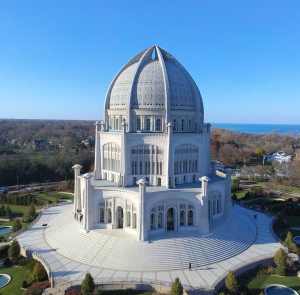
Baha'i temple, Ridvan

A Baha’i temple, in Wilmette, Illinois. Photo by Michael Lackovich, courtesy of Wikimedia Commons

SUNSET SATURDAY, APRIL 20: The most holy Baha’i festival worldwide is the 12-day period known as Ridvan—and it starts today, with the First Day of Ridvan.

Named “Ridvan” for “paradise,” this sacred festival commemorates Baha’u’llah’s time in the Najibiyyih Garden. After he was exiled by the Ottoman Empire, Baha’u’llah spent time in this garden and, here, made the first announcement of his prophethood. For Baha’is, Ridvan is the “King of Festivals,” and the first, ninth and 12th days are occasions for work and school to be suspended.

RIDVAN: BAHA’U’LLAH AND THE NAJIBIYYIH GARDEN

The story of Ridvan actually begins years before Baha’u’llah revealed his identity and took up temporary residence in the Najibiyyih Garden, with a man who called himself “the Bab” (translated, the Gate). The year was 1844 CE when Siyyid Ali-Muhammad, of Shiraz, made the proclamation that he was the Bab—and that a Messianic figure was coming. Nine years later, the man known as Baha’u’llah experienced a revelation while imprisoned in Tehran, Iran: he was the Promised One foretold of by the Bab.

After release from prison, Baha’u’llah settled in Baghdad, which was becoming the center of the Babi (followers of the Bab) movement. Though he made no open claims related to his revelation, Baha’u’llah slowly began attracting more and more Babi followers. The growing Babi community, along with Baha’u’llah’s increasing popularity, caused the government to exile Baha’u’llah from Baghdad to Constantinople. (Learn more from the Baha’i Library Online.) After having packed his things, Baha’u’llah stayed in the Najibiyyih garden to both receive visitors and allow his family sufficient time to pack for the journey.

Precisely 31 days after Naw-Ruz, on April 22, 1863, Baha’u’llah moved to a garden across the Tigris River from Baghdad with his sons, secretary and a few others. In the Najibiyyih Garden, Baha’u’llah announced his prophetic mission to a small group of close friends and family. In addition, Baha’ullah made three announcements: that religious war was not permissible; that there would not be another Manifestation of God for 1,000 years; and that all the names of God are fully manifest in all things. For 11 days, Baha’u’llah stayed in the Najibiyyih Garden. On the ninth day, the rest of his family joined him; on the 12th day, the entire group departed for Constantinople.

THE ‘MOST GREAT FESTIVAL’

During Ridvan, those of the Baha’i community gather, pray and hold celebrations.

In addition, Local Spiritual Assemblies—that is, the governing bodies of Baha’i communities worldwide—are elected on the first day of Ridvan.

NEWS: Notre Dame Law School recently held its third annual Interfaith Dinner, noting the observance of multiple holidays, including Ridvan. Read more here.


from Religious Holidays https://ift.tt/yT2Owp8

Saturday, April 13, 2024

Passover: Jews prepare seders for a Pesach ‘different from all other nights’

April 13, 2024 0
Passover: Jews prepare seders for a Pesach ‘different from all other nights’
https://ift.tt/MCcSPxt
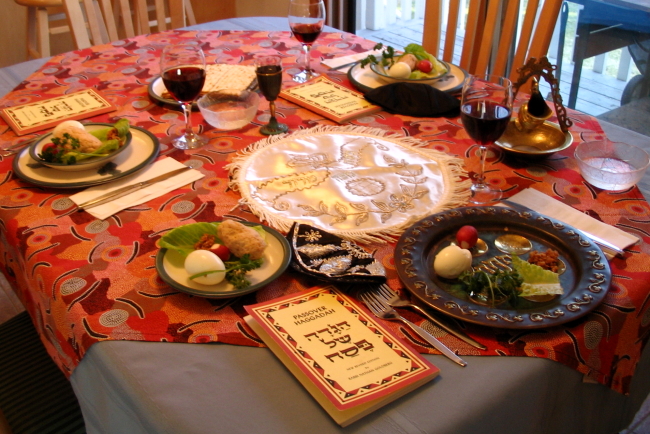
Passover seder table

A table set for a Passover seder. Photo courtesy of Wikimedia Commons

SUNSET MONDAY, APRIL 22: Tonight, Jews begin the joyous and deeply reflective festival of Passoverthe most widely observed of all Jewish traditions.

Passover Basics

Click the cover to visit the book’s Amazon page.

A few years ago, as Holidays & Festivals columnist for ReadTheSpirit magazine, I wrote an extensive Holidays section of the Michigan State University School of Journalism Bias Busters book called 100 Questions and Answers About American Jews with a Guide to Jewish Holidays.

Here is part of what I wrote in that book, which now is widely used by individuals and groups nationwide who want to know more about our neighbors’ faiths and cultures:

For eight days, starting with 15 Nissan, Passover recalls the ancient Israelites’ Exodus from slavery in Egypt. During Passover, Jewish families are reminded of when their ancestors were slaves in Egypt. Prior to the start of Passover, it is traditional for observant Jews to clean their homes so that not even a crumb of leavened food, or chametz, is present. While only one Seder is conducted in Israel, outside of Israel the first two nights of Passover have a Seder—a meal with symbolic foods, prayers, stories, songs and activities. In some homes, the Seder can last deep into the night. Most Jewish communities also offer “model Seders” for non-Jews who want to learn about this experience prior to Passover.

Many non-Jews are familiar from movies and TV shows with some of the Passover customs, such as the moment when the youngest in the household asks Four Questions, beginning with: “Why is this night different from all other nights?” Passover usually is experienced as a family reunion, a history lesson, an affirmation of survival and a time of reflecting on ways to help the vulnerable.

EGYPT, SLAVERY AND MATZAH

Matzah ball soup is traditional at Passover—and, this year, our magazine includes a personal story by author Rusty Rosman about making her traditional soup in a way that allows her transport it across country to family. gatherings.

Among the events in the biblical story recalled during the seder, Jews give thanks to G_d for “passing over” the homes of those whose doors were marked with lamb’s blood during the biblical Plague of the Firstborn, for helping them to escape safely from Egypt’s army and for eventually leading them to freedom.

Why is it so important to get rid of leavened products during this time?

According to Exodus, as the Israelites left Egypt they moved so quickly that their bread was not able to rise. To this day, unleavened matzah (spellings vary) is a staple element on seder tables and a symbol of this ancient festival.

Did you know? Matzo is made from flour and water that is mixed and baked in 18 minutes—to prevent the dough from rising. As matzo is such an important element of Passover, many Jews are trying to revive the art of homemade matzo. Baking matzo is a challenge; only 18 minutes are allowed between the mixing of flour and water to the finishing of baking. Elaborate measures are taken to ensure the mixture does not rise.

Throughout the holiday period, and in more traditionally observant households, the dishes and baking tools used for the Passover seder are reserved only for this time and have never come into contact with chametz. So, in many households—and in institutions that keep Kosher—there can be an enormous amount of preparation involved. In some cases, institutional ovens are “changed out” before the holiday period to ensure that cooks are using Kosher-for-Passover stoves. Most Kosher homes don’t have that luxury, so they go through an elaborate process of cleansing stoves before the holiday.

A lot of work goes into Passover!

During Passover, the Torah obligation of the Counting of the Omer begins. On the second day of Passover, keeping track of the omer—an ancient unit of measure—marks the days from Passover to Shavuot.


from Religious Holidays https://ift.tt/uCbvdAJ

Friday, March 29, 2024

Eid al-Fitr is coming, most likely on April 10! So, cue the trays of sweet treats!

March 29, 2024 0
Eid al-Fitr is coming, most likely on April 10! So, cue the trays of sweet treats!
https://ift.tt/T3U6QRd

SUNDOWN, TUESDAY APRIL 9, Ramadan ends with “Eid” starting WEDNESDAY, APRIL 10—That’s the schedule most Muslim communities are counting on in 2024. Muslim groups at major universities, for example, are pointing to Wednesday the 10th for their big Eid al-Fitr celebrations.

However, Ramadan traditionally is marked by sightings of the moon in regions around the world, so the dates could vary somewhat. One example is India, where The Times of India recently reported that the Eid al-Fitr is likely to begin on April 11 this year—at least in most regions of the country.

Also varying around the world is the length of the Eid celebration, which can be observed for between one and three days—and some parts of the world continue the Eid for up to a week!

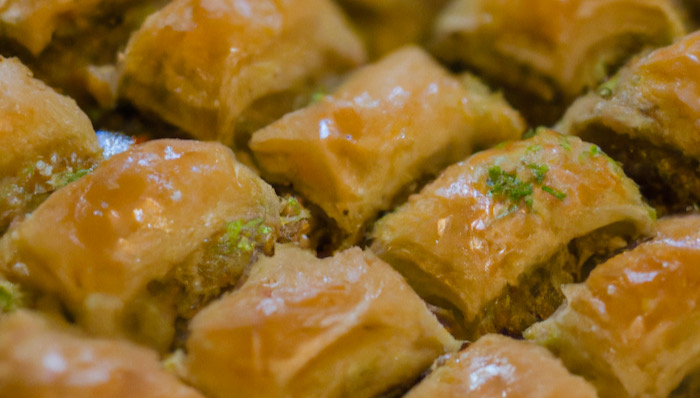
This is usually a joyous time, starting with huge communal prayers on the first morning of the Eid. At many mosques and Muslim community centers, huge trays of sweet treats are passed around—because just as fasting is mandated during the day during Ramadan, eating is required after the fast ends. The good cheer and good eating traditionally continues through gatherings with family and friends—and big daytime meals for the first time in a month.

One Muslim leader likes to say: “Think of Thanksgiving extended across a couple of days.”

EID AL-FITR: FROM SUNRISE TO SUNSET

Before sunrise on Eid al-Fitr, Muslims pray, bathe and put on their best clothing. A small breakfast—usually including dates—is consumed before heading to a nearby mosque (or, in some cases, an open square or field). In the mosques, open squares and fields, Muslims pray in unison; following prayers, feasting commences.

Zakat (charitable giving) has been completed, and many adherents spend ample time enjoying the company of family and friends, attending carnivals and fireworks displays, giving gifts and expressing thanks to Allah.

Did you know? The first Eid was observed by the Prophet Muhammad in 624 CE. 

The grand holiday of Eid al-Fitr is referred to in many ways: the Sugar Feast, Sweet Festival, Feast of the Breaking of the Fast and Bajram, to name just a few.

AROUND THE WORLD: FROM THE UK TO ASIA TO AFRICA

With nearly one-quarter of the world’s population observing the Islamic faith, countries around the world are preparing their banks, airlines, shops, business hours and public services for the major holiday.

Unlike most Muslim holidays, which may or may not be observed by all Muslims each year, the two Eid holidays—Eid al-Adha and Eid al-Fitr—are commemorated universally.

In the UK, some of the largest festivals of the year will take place for the Eid holidays.

Did you know?
In Egypt, Eid ul-Fitr is an occasion for neighborhood carnivals; in Asia, a celebratory dish contains toasted sweet vermicelli noodles and dried fruit; in Saudi Arabia, wealthy families buy large quantities of rice and other staples and leave them anonymously on the doorsteps of those less fortunate.

Looking for Eid recipes?
Sweet and savory selections are available courtesy of the BBC. For sweet recipes, check out NPR.org.

.

.


from Religious Holidays https://ift.tt/MhDv9Wb

Monday, March 25, 2024

‘Stopping by …’ Robert Frost’s poetry to mark his sesquicentennial

March 25, 2024 0
‘Stopping by …’ Robert Frost’s poetry to mark his sesquicentennial
https://ift.tt/qjMGmlB

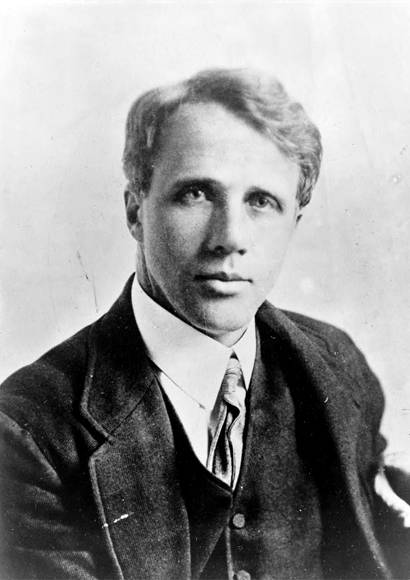
Robert Frost in about 1910. (Photo in public domain.)

ON MARCH 26, 1874, Robert Frost was born not in New England, as many of his readers may assume, but in San Francisco. In fact, he did not become a New England farmer until 1900, when his grandfather gave him and his wife Elinor a farm in Derry, New Hampshire. He had suffered from ill health during his studies at Harvard and his family assumed that moving to a farm might improve his health. In fact, contrary to popular assumptions, Frost was a terrible farmer at first.

Of course, farming fueled much of his poetic vision, which eventually led to his becoming the only poet ever to win four Pulitzer Prizes. (He was nominated for the Nobel Prize in Literature 31 times, but never won that award.)

His legacy has shaped American culture in countless ways, including during the presidency of John F. Kennedy, countless references in films and TV shows and in the works of such best-selling novelists as George R.R. Martin and Stephenie Meyer. And, he was a huge influence on the life and work of Nobel Prize-winning poet Joseph Brodsky.

To mark this milestone, and the publication of a special new selection of Frost’s most beloved poems by the Library of America, ReadTheSpirit Editor David Crumm wrote this tribute to Frost (and Brodsky’s promotion of Frost) in Goodreads, headlined: Sharing Poetic Pointers with Old Friends


from Religious Holidays https://ift.tt/c5bVOos

Sunday, March 10, 2024

Eastern Orthodox Christians begin the Great Lenten Fast

March 10, 2024 0
Eastern Orthodox Christians begin the Great Lenten Fast
https://ift.tt/dCQOe79

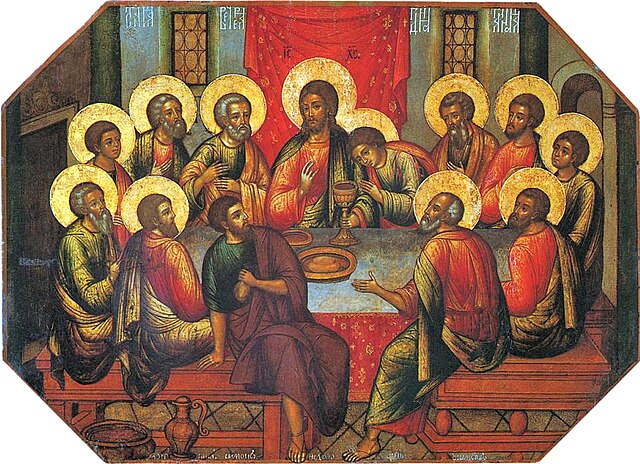
This Orthodox icon of the Last Supper was painted by Simon Ushakov in 1685. The image now is in public domain via Wikimedia Commons.

.

MONDAY, MARCH 18: The flavors of shellfish and lagana bread are associated with the start of the Lenten season in Greece. Outside, colorful kites fly above the fields as Orthodox Christians mark Clean Monday.

Western Christians began the Lenten season of reflection that leads toward the celebration of Easter last week with Ash Wednesday.

The centuries-old tradition of observing Lent as a season of reflection and self-denial is intended to prepare Christians for the greatest festival in their religious calendar: Easter. However, the ever-changing date of Easter—and the method of counting 40 days in Lent—is one of the centuries-old differences among Christians East and West.

There are many differences in Lenten customs between Eastern and Western branches of Christianity—but the call to fast is one of the central spiritual challenges in Eastern churches. Many Western Christian denominations still call on members to “give something up” for Lent. But observant members of Eastern churches often have calendars on the wall—or apps on the smartphones—listing the foods they are giving up. The list becomes quite extensive! Customs vary in each national culture, but the faithful may be abstaining from meat, fish, eggs, dairy products, wine and some oils. This leads to distinctive—and often both healthy and delicious—regional Lenten cuisines.

Another big difference? “Western Christians count Lent’s 40 days as starting with Ash Wednesday but excluding Sundays. Eastern Christians, those generally called Orthodox, start their 40 days on a Monday, counting Sundays, but excluding the week leading up to Easter.” That’s one of the intriguing details in the book, Our Lent: Things We Carry, by Read The Spirit magazine Editor David Crumm. “Some Christians fast; some don’t. Millions of Western Christians retain a custom of limited fasting; millions of Eastern Christians prayerfully make significant sacrifices during this season.”

CLEAN MONDAY IN GREECE

Rather than begin Lent in a solemn manner, Clean Monday is celebrated as a public holiday in Greece and Cyprus: outdoor activities, zany local traditions, kite flying and plenty of Lenten-friendly food is par for the course. As shellfish is permitted in these cultures throughout Lent, a spread of extravagant dishes—based on the bounty of the sea—is common on Clean Monday in Greece.

Customs and traditions vary by locality in Greece on the first day the Lenten season, with colored flour being thrown into crowds in Glaxidi, on the northern coast of the Corinth Gulf; on the Greek island of Chios, a man dresses up as “Aga,” or “Ayas” (the tax collector), then he and his followers grab local villagers to put them into a mock trial. The “criminals” found guilty must suffer punishment or pay a fine that funds the village’s cultural association.

KITES AND CULINARY DELIGHTS

The flying of kites across Greece welcomes spring in a colorful and festive manner, and many traditional kite makers pride themselves on decades of experience. When out and about, picnic baskets are often filled with lagana, an unleavened bread baked only for Clean Monday, and taramosalata, a dip made of salted and cured roe mixed with olive oil, lemon juice and bread crumbs. Feasts of bean soup, shellfish dishes, octopus platters, shrimp dishes and more are carefully prepared for a Clean Monday extravaganza.

In Greece, lagana is usually baked on large sheets and cut into smaller portions for serving. The bread is decorated with sesame seeds, which add a distinct flavor and texture to the bread. Aside from its cultural significance, lagana bread is also delicious and nutritious. It is low in fat and high in fiber, making it an ideal food for people who are observing the Lenten fast. The sesame seeds on top of the bread add a nutty flavor and a satisfying crunch, making it a popular snack for people of all ages.

Interested in baking lagana? Find a recipe at the blog Lemon & Olives, or at The Greek Vegan.


from Religious Holidays https://ift.tt/QVpgPAq

Monday, March 4, 2024

Maha Shivaratri: Hindus fast, hold vigils and observe ‘Great Night of Shiva’

March 04, 2024 0
Maha Shivaratri: Hindus fast, hold vigils and observe ‘Great Night of Shiva’
https://ift.tt/I8wqlus
Maha Shivaratri devotees

Hindus in the Shiv temple in Agra, India, on Maha Shivratri. Photo courtesy of Wikimedia Commons

FRIDAY, MARCH 8: A day of fasting and worship is followed by a nighttime vigil for Lord Shiva, on the Hindu holiday of Maha Shivaratri. Lord Shiva is associated with several legends and renowned as the model of an ideal husband. On Maha Shivaratri, many Hindus believe that Lord Shiva performed the Tandava—the cosmic dance of creation, preservation and destruction.

After a full day of visiting temples, performing ritual baths for figures of Lord Shiva and fasting, Hindus begin a vigil that lasts the entire night.

2024 rules and travels:  Additional rules of the fast—including details for 2024—can be found in this article, from the Times of India. Alternatively, this article from the Outlook Traveller explores Mount Kailash, the holy location where Hindus believe that Mahadeva (Shiva) lives, along with his consort, Parvati.

LORD SHIVA: MARRIAGE AND LINGA

Many stories are shared as this holiday is celebrated by Hindus in India, Nepal, Trinidad, Tobago and other parts of the world. According to one legend, Lord Shiva and his consort, Parvati, were married on this day. As the marriage of Lord Shiva and Parvatai is regarded as ideal, married women pray for the well-being of their husbands and single women pray that they will find a husband like Shiva.

RITUALS AND CUSTOMS

After waking early for a ritual bath, Hindus begin the day by visiting the temple. At the temple, Hindus pray, make offerings and bathe figures of Shiva in milk, honey or water. Many devotees either fast or partake in only milk and fruit throughout the day. As evening falls, the worship continues, and hymns and devotional songs are sung to Shiva throughout the night. It’s believed that sincere worship of Lord Shiva on Maha Shivaratri—Lord Shiva’s favorite day—will bring absolution of sins, neutrality of the mind and assistance in liberation from the cycle of death and rebirth.



from Religious Holidays https://ift.tt/rF3e0Yo

Thursday, January 25, 2024

Four Chaplains Day honors interfaith sacrifice in WWII and ‘Unity without Uniformity’

January 25, 2024 0
Four Chaplains Day honors interfaith sacrifice in WWII and ‘Unity without Uniformity’
https://ift.tt/kwzcHDf

Shown are the public photos of the famous four U.S. Army chaplains: Lt. Alexander Goode, a rabbi; Lt. George Fox, a Methodist minister; Lt. Clark Poling, a Dutch Reformed minister; and Lt. John Washington, a Roman Catholic priest. All four perished with the sinking of the SS Dorchester after being struck by a German torpedo, Feb. 3, 1943. In 1988, Congress honored them by establishing Feb. 3 as Four Chaplains Day. (NOTE: Anyone is free to save and re-share this photograph.)


SATURDAY, FEBRUARY 3: In many chapels, congregations and American Legion halls nationwide, a Four Chaplains observance is held every year on February 3rd to remember and honor four brave chaplains who sacrificed their lives to save the lives of others.

On February 3, 1943, the US Army transport ship Dorchester was carrying 902 soldiers, civilians, and crew members across the North Atlantic. Suddenly, the ship was hit by a German torpedo and started sinking rapidly. Panic and chaos broke out among the passengers, many of whom could not swim.

The U.S. Air Force published Captain Brett Barner’s and Chaplain Mark Schutzius’s column about the observance, which dramatically sums up the story:

Amidst the terror and confusion, the four chaplains began to guide and direct everyone on board. It was dark, cold and the ship was sinking quickly. Naturally, people began to panic and feared for their lives. These chaplains brought a sense of calm and peace in a time of incredible uncertainty. One account says that petty officer John Mahoney headed back towards his cabin when Rabbi Goode noticed he was going the wrong way and asked where he was going. “To get my gloves,” Mahoney responded. Rabbi Goode told him to take his gloves, but Mahoney resisted. He contended that he couldn’t take the chaplain’s own gloves. “Never mind, I have two pairs,” Rabbi Goode replied. It’s said that Mahoney later realized the chaplain never planned to leave the vessel.

Each chaplain eventually made it to the top of the ship and helped distribute life jackets and get survivors into lifeboats. As you can imagine, things were stressful. People began to wonder if they would receive a life jacket or if there would be enough room in the life boats. Again, these chaplains helped calm those fears. When life jackets ran out, one account says that the chaplains immediately offered their four life jackets to four service members who hadn’t received them. One survivor said, “It was the finest thing I have seen or hope to see this side of heaven.”

Their bravery and selflessness didn’t end there. Eyewitnesses say that as the ship finally began to sink below the water, the four chaplains stood against the deck with their arms linked together. They prayed together. They sang together. They died together.

Honoring ‘Unity without Uniformity’

In 2024, with record rates of antisemitism and Islamophobia in the U.S. and around the world, a remembrance of their joint sacrifice seems especially appropriate to many community leaders. Check in your part of the U.S., because many local events seem to have been planned this year.

Ceremonies in honor of the courageous men emphasize “unity without uniformity,” a primary part of the mission of the Four Chaplains Memorial Foundation. The Chapel of the Four Chaplains was dedicated by President Harry S. Truman in 1951. In 1988, an act of Congress officially declared February 3 as an annual Four Chaplains Day.

The four chaplains were posthumously awarded the Purple Heart and Distinguished Service Cross. In 1960, a Congressional Medal of Valor was created and presented to the chaplains’ next of kin. Stained glass windows of the men still exist in a number of chapels across the country—and at the Pentagon—and each year, American Legions posts nationwide continue to honor the Four Chaplains with memorial services. The Four Chaplains Memorial Foundation continues to honor those who exemplify the heroic traits of the Four Chaplains, promoting “unity without uniformity.”


from Religious Holidays https://ift.tt/Bs8zkhL